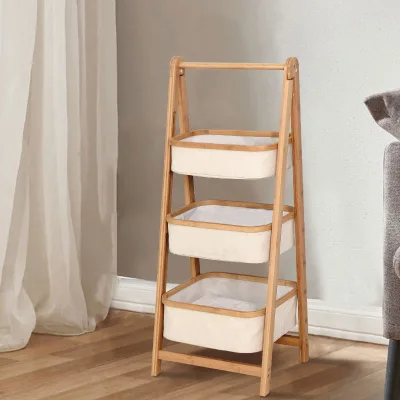
Source Three Layers Bamboo Storage Rack for Home, Warehouse, Retail
Compare 30 listings for the three layers bamboo storage rack featuring customizable designs, solid wood or bamboo materials, and mobile shelf structures. Buyers can review specifications like 3-layer configurations, natural colors, and delivery times ranging from 7 to 30 days for various applications.
Key considerations
Products List




Comprehensive Sourcing Guide
Three Layers Bamboo Storage Rack Sourcing Guide
Sourcing a three-layer bamboo storage rack requires a nuanced understanding of material properties, structural integrity, and supply chain transparency. Bamboo is a rapidly renewable resource that offers a unique combination of strength and aesthetic appeal, making it a popular choice for modern storage solutions. However, the term "bamboo" in the furniture industry can sometimes refer to engineered wood products rather than solid bamboo stalks. Buyers must distinguish between solid bamboo, laminated bamboo, and bamboo-composite materials to ensure they receive the durability and environmental benefits they expect. This guide provides a structured approach to evaluating suppliers, verifying technical specifications, and managing commercial risks associated with this product category.
The procurement process for these racks involves balancing aesthetic preferences with functional requirements such as load capacity and assembly ease. Observed market data indicates a wide range in pricing and minimum order quantities (MOQs), reflecting the diversity of manufacturing capabilities and material grades available. From basic utility racks to high-end designer pieces, the three-layer configuration offers a versatile storage solution for various environments. This guide focuses on helping buyers navigate these variations by establishing clear verification steps for quality, compliance, and supplier reliability, ensuring that the final product meets both operational needs and brand standards.
Product Scope and Observed Listing Signals
The market for three-layer bamboo storage racks exhibits significant variability in design, material composition, and intended use. Observed listings reveal a price range from approximately $0.03 to $121.80 USD, which suggests a broad spectrum of product quality and manufacturing complexity. Lower-priced items may represent simple, lightweight utility racks or components, while higher-priced units likely feature solid wood construction, premium bamboo finishes, or complex modular designs. Buyers should interpret these price points as indicators of material grade and manufacturing sophistication rather than direct value comparisons, as factors such as packaging, shipping, and customization options heavily influence the final cost.
Minimum order quantities (MOQs) typically range from 100 to 1000 units, reflecting the standard practices of wholesale and OEM manufacturing. Suppliers offering lower MOQs may cater to smaller retailers or prototype orders, often at a higher per-unit cost, while those requiring higher volumes provide economies of scale for bulk procurement. It is crucial to verify whether the listed MOQ applies to a single SKU or allows for mixed orders, as this impacts inventory management and cash flow. Additionally, many suppliers offer customization services, allowing buyers to tailor dimensions, finishes, and packaging to their specific brand requirements, which can affect lead times and initial setup costs.
Technical Specifications to Verify
Verifying the material composition is the most critical technical step in sourcing bamboo storage racks. While many listings specify "bamboo" or "wood," buyers must confirm whether the product is made from solid bamboo, laminated bamboo strips, or bamboo fiber composite. Solid bamboo offers superior durability and a distinct grain pattern, whereas laminated bamboo provides greater stability and resistance to warping. Some suppliers may list "solid wood" or "bamboo" interchangeably, so requesting detailed material breakdowns and sample inspections is essential to avoid discrepancies between marketing claims and actual product composition.
Structural specifications such as dimensions, weight capacity, and assembly features must be rigorously checked against operational needs. Observed standards include dimensions like 643373cm and 700700450mm, indicating that size is often customizable. Buyers should verify the number of layers, with three-layer configurations being common for balanced storage and accessibility. Additionally, features such as disassembly capability, mobility (e.g., casters), and load-bearing capacity per shelf are vital for warehouse or retail applications. Confirming the exact weight of the unit, which can range from lightweight portable racks to heavier 150kg structures, ensures compatibility with logistics and handling equipment.
Compliance and Safety Documentation
Compliance with international safety and environmental standards is non-negotiable for importing furniture products. Buyers should request certifications such as CE or EU compliance, which indicate adherence to European safety, health, and environmental protection requirements. While FSC (Forest Stewardship Council) certification is often mentioned in the broader bamboo category, its specific status for a given product must be verified directly with the supplier, as it is not universally applied to all bamboo items. Ensuring that the supplier holds valid certifications protects against regulatory hurdles at customs and enhances the product's marketability in regions with strict environmental regulations.
Chemical safety and finish compliance are equally important, particularly for products intended for residential or food-adjacent environments. Buyers should inquire about the types of adhesives, paints, and sealants used in the manufacturing process, ensuring they meet low-VOC (Volatile Organic Compounds) standards. Requesting test reports for formaldehyde emissions and heavy metal content can provide additional assurance of product safety. Furthermore, verifying that the product meets export standards, such as those required for 100% exporter standard compliance, helps ensure that the goods will clear customs without delays due to non-compliance issues.
Cost Drivers and Commercial Terms
Understanding the factors that influence pricing is essential for effective budgeting and negotiation. Key cost drivers include the type of bamboo used, the complexity of the design, and the level of customization required. Customizable designs and specific packaging requirements, such as carton or palletizing, can increase production costs. Additionally, the origin of the product, often from regions like Fujian, China, affects labor and material costs. Buyers should analyze the total landed cost, including shipping, insurance, and tariffs, rather than focusing solely on the unit price, to get a accurate picture of the investment.
Commercial terms such as payment methods, lead times, and return policies significantly impact the procurement process. Observed lead times range from 7 to 30 days after order confirmation, depending on the order volume and customization level. Buyers should negotiate clear delivery schedules and penalties for delays to mitigate supply chain risks. Payment terms, such as deposits and balance payments upon shipment, should be structured to balance risk for both parties. Additionally, understanding the supplier's policy on defective goods and returns is crucial for managing potential quality issues that may arise during transit or upon inspection.
Supplier Qualification and Quality Control
Evaluating supplier qualifications is a proactive step to ensure long-term partnership stability and product consistency. Buyers should verify the supplier's business license, manufacturing capabilities, and export history. Suppliers that emphasize quality control, such as having experienced QC teams to check all products, are more likely to deliver consistent quality. Requesting references from existing clients, particularly those in similar markets, can provide insights into the supplier's reliability and responsiveness. Additionally, assessing the supplier's ability to handle OEM requests and provide technical support is vital for brands seeking customized solutions.
Implementing a robust quality control process is essential to mitigate the risk of receiving substandard products. Buyers should consider hiring third-party inspection services to conduct pre-shipment inspections, verifying product quality, quantity, and packaging against agreed specifications. Establishing clear quality acceptance criteria, including tolerances for dimensions, finish defects, and structural integrity, helps in making objective decisions during inspections. Regular communication with the supplier regarding quality feedback and continuous improvement initiatives can also help maintain high standards and address any emerging issues promptly.
Long-Term Procurement Checks
Building a sustainable supply chain requires ongoing monitoring and relationship management. Buyers should regularly review supplier performance metrics, such as on-time delivery rates, product quality consistency, and responsiveness to issues. Establishing a periodic review process allows for the identification of trends and the implementation of corrective actions if necessary. Additionally, fostering open communication channels with the supplier can facilitate collaboration on product improvements and cost-saving opportunities. Long-term partnerships often lead to better pricing, priority production slots, and enhanced support during peak seasons.
Adapting to market changes and evolving consumer preferences is crucial for maintaining competitiveness. Buyers should stay informed about trends in sustainable materials, design aesthetics, and regulatory requirements. Regularly updating product specifications and sourcing strategies ensures that the procurement process remains aligned with business goals. Additionally, exploring alternative suppliers and diversifying the supply base can reduce dependency on a single source and mitigate risks associated with geopolitical or logistical disruptions. By maintaining a flexible and informed approach, buyers can secure a reliable supply of high-quality three-layer bamboo storage racks.
FAQs
Can I customize the design of the three layers bamboo storage rack?
Yes, the design is customizable to meet specific buyer requirements. The product supports custom standards and features a modern or European style depending on the order. This allows for tailored solutions while maintaining the natural bamboo material and structural integrity.
What is the lead time for ordering a three layers bamboo storage rack?
The delivery detail is typically 7 to 30 days after your order is confirmed. This timeframe applies to the production and shipping process for the customized or standard units. Buyers should plan their inventory accordingly based on this confirmed lead time window.
Which certifications are available for the three layers bamboo storage rack?
The product holds CE and EU certifications to ensure compliance with safety standards. These certifications verify that the manufacturing process meets specific regulatory requirements for the target markets. Buyers can rely on these documented standards when sourcing for regulated regions.
How is the three layers bamboo storage rack packed for shipping?
The product is packed in cartons, boxes, or palletized units depending on the order specifics. Some configurations include standard packaging cartons with line charts for assembly guidance. This ensures the wooden or bamboo structure arrives safely and is ready for immediate use.
What is the origin location for the three layers bamboo storage rack?
The product originates from China, with specific manufacturing hubs in Fujian. This location supports the supply chain for bamboo and solid wood materials used in the construction. Buyers can expect consistent quality from these established production regions.
Can the three layers bamboo storage rack be disassembled for transport?
Yes, the unit is designed with disassembly features to facilitate easier shipping and storage. This practical attribute allows the rack to be transported efficiently before being reassembled at the destination. It is ideal for warehouse or storage applications requiring flexible logistics.